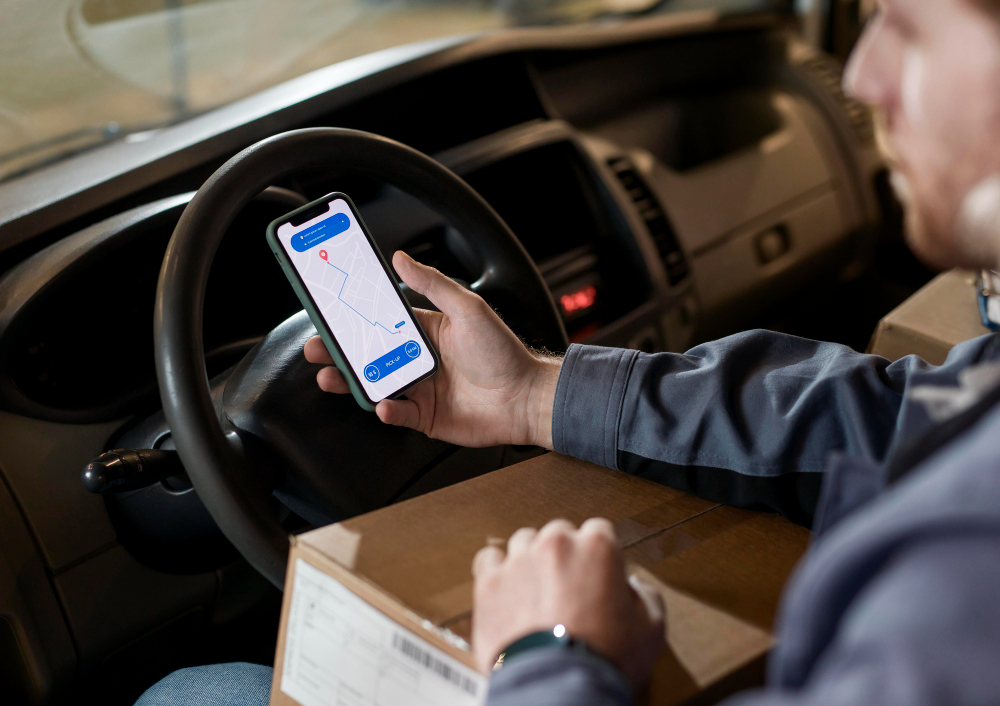
What Is Route Optimization?

Route optimization is the process of calculating the most efficient sequence and assignment of delivery stops across a fleet of vehicles — accounting for real-world constraints like delivery time windows, vehicle capacity, traffic conditions, driver hours, and geography.

It is often confused with simple navigation (Google Maps giving turn-by-turn directions). Navigation solves a single-vehicle, fixed-destination problem. Route optimization solves a multi-vehicle, multi-stop, multi-constraint problem that is orders of magnitude more complex.

The underlying mathematical problem — known as the Vehicle Routing Problem (VRP) — is computationally hard. Even for a modest operation of 10 drivers and 200 stops, the number of possible route combinations exceeds the number of atoms in the observable universe. No human dispatcher can find the optimal solution manually; only algorithms can.

What Good Route Optimization Looks Like in Practice

Consider a regional courier in Saudi Arabia running 15 drivers across Riyadh. Before optimization, routes were planned manually each morning by a single dispatcher — a process taking 90 minutes and producing routes with significant overlap and backtracking.

After implementing algorithmic route optimization, the same dispatcher plans all 15 routes in under 10 minutes. Average route distance dropped by 28%. Drivers complete their stops 45 minutes earlier on average. Failed deliveries dropped because drivers have more time per stop and arrive within committed time windows.

iCargos includes a built-in route optimization engine designed for exactly these conditions — dense urban environments with irregular address formats, traffic variability, and mixed delivery windows. The platform handles Arabic-language driver instructions natively, which matters in markets where many delivery drivers are not English speakers.

Choosing the Right Route Optimization Platform

Standalone vs Integrated

Some vendors specialize purely in route optimization (Routific, OptimoRoute). Others embed optimization within a broader delivery management platform that also handles dispatch, tracking, ePOD, and customer notifications.

For most courier companies, the integrated approach is more practical. Switching data between a standalone optimizer and a separate dispatch system creates friction and errors. Platforms like iCargos include optimization as one module within a complete delivery management stack, so routes flow directly to driver dispatch without manual export/import steps.

Geographic Fit:Route optimization quality depends heavily on map data quality and address geocoding accuracy. In markets with informal addressing — common across MENA and sub-Saharan Africa — platforms with local map data partnerships and fuzzy address matching outperform those relying solely on Google Maps geocoding.

Scalability:Test the platform at 2–3x your current volume. Optimization algorithms that work well for 50 stops may degrade in quality or speed at 500 stops. Ask vendors for benchmark data at your expected scale.

iCargos Route Optimization

iCargos provides multi-constraint route optimization built for courier operations in high-growth markets. Key capabilities include:

  • Automated daily route planning across unlimited drivers and depots

  • Time window enforcement with customer notification integration

  • Dynamic re-optimization when orders are added or cancelled mid-day

  • Driver app delivery in Arabic, English, French, and other regional languages

  • Full planned vs. actual route comparison for performance management

Courier companies using iCargos typically reduce total driven distance by 25–35% and cut planning time from 60–90 minutes to under 10 minutes per day.

How Route Optimization Algorithms Work

Modern route optimization platforms use several algorithmic approaches, often in combination:

Constraint-Based Optimization:The algorithm models each delivery as a node with associated constraints: time window, service time, location coordinates. It then searches for a solution that satisfies all constraints while minimizing total cost (distance, time, or a weighted combination).

Heuristic and Metaheuristic Approaches:Pure mathematical optimization is computationally expensive at scale. Most commercial platforms use heuristics — algorithms that find very good (though not always provably optimal) solutions quickly. Common approaches include:

Clarke-Wright Savings Algorithm: Builds routes by iteratively merging stops where merging produces a distance saving

Or-opt and 2-opt improvements: Swap stops between routes or reverse segments to reduce total distance

Genetic algorithms and simulated annealing: Explore many possible solutions simultaneously, retaining improvements

AI and Machine Learning Enhancements

Newer platforms use historical delivery data to predict service times at specific stops, adjust for traffic patterns by time of day, and learn which constraints are binding vs. theoretical. This improves plan accuracy over time.

Route Optimization Pays for Itself

Most route optimization software costs $300–$800/month for a 20-driver operation. The payback period is typically less than two weeks.This calculation excludes secondary benefits: reduced vehicle maintenance, lower failed delivery rates (optimized routes leave more time per stop), and improved customer satisfaction.

Calculating ROI Before You Buy

Before evaluating vendors, calculate the baseline cost of your current routing inefficiency. Here is a simple model:

Step 1: Estimate excess distance — Most manual routing operations run 20–30% more distance than an optimized route plan. If your fleet drives 10,000 km/day, assume 2,000–3,000 km is recoverable.

Step 2: Convert to fuel cost— At $0.15/km in fuel (typical for a light van), 2,000 recoverable km/day = $300/day in fuel savings.

Step 3: Add driver time savings — Fewer kilometers means shorter shifts. For a 20-driver fleet, a 30-minute reduction per driver per day = 10 driver-hours saved. At $10–20/hour fully loaded, that is $100–$200/day.

Step 4: Calculate monthly savings — $300 + $150 (midpoint of driver time savings) = $450/day × 25 operating days = $11,250/month in recoverable cost.

Ready to Optimize Your Delivery Routes?

Ready to optimize your delivery operations? See how iCargos works at iCargo.

iCargos © Copyright 2025. All Rights Reserved. - Powered By IT Vision Pvt. Ltd.